How to Build a Multi-Agent AI System: Architecture Guide
Discover how to build a multi-agent AI system from the ground up. This guide covers essential architectures, coordination patterns, and best practices for creating robust and scalable AI solutions in late 2025 and 2026.
Introduction: The Rise of Multi-Agent AI Systems in 2026
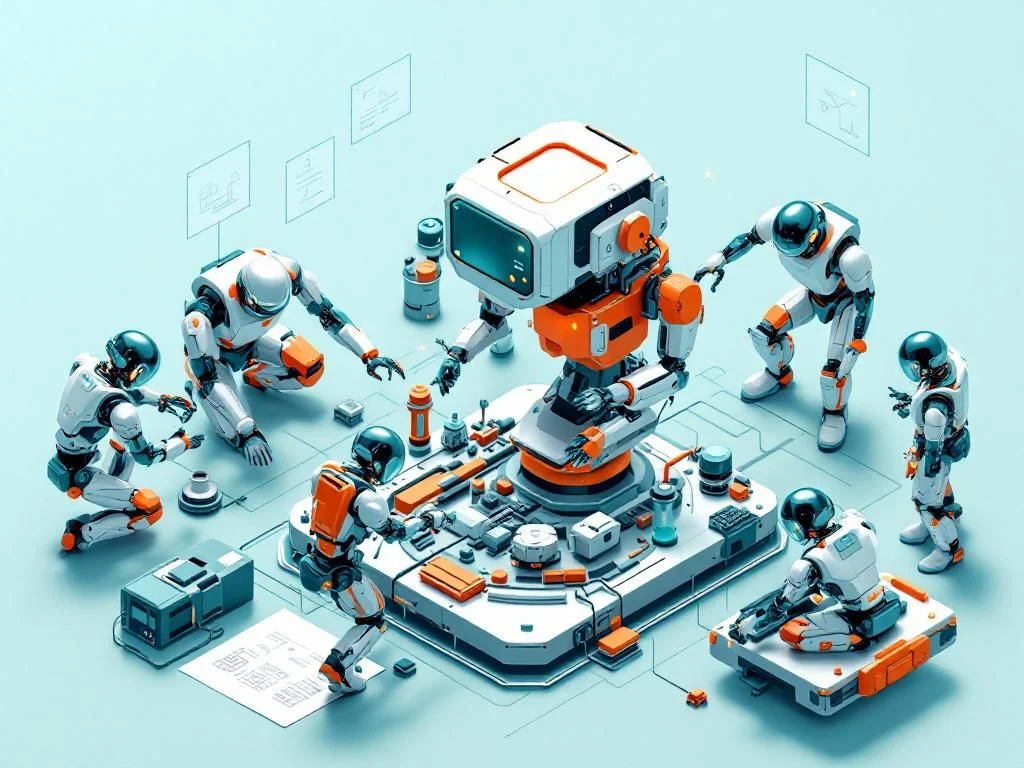
As we move into 2026, the landscape of artificial intelligence is rapidly evolving beyond monolithic models. The industry is witnessing a significant shift towards multi-agent AI systems, where specialized AI entities collaborate to tackle complex problems that a single agent cannot efficiently solve. This architectural paradigm offers unparalleled scalability, resilience, and modularity, making it crucial for enterprises aiming to deploy sophisticated AI solutions. Understanding how to build a multi-agent system is now a core competency for any forward-thinking AI developer or organization. This comprehensive guide will walk you through the fundamental principles, architectural patterns, and practical considerations for developing effective multi-agent AI systems in the current technological climate.
The adoption rate of multi-agent systems is soaring, with projections indicating that by 2026, a substantial percentage of enterprise applications will integrate task-specific AI agents. This trend is driven by the demand for more intelligent automation, dynamic problem-solving, and efficient resource utilization. From orchestrating complex business processes to powering advanced research, multi-agent architectures are becoming the backbone of next-generation AI. Here at Multi AI, we recognize this shift and provide access to a diverse range of powerful models like GPT-5.3-Codex and Gemini 3.1 Pro Preview that can serve as the intelligent components within your multi-agent setups.
Core Components of a Multi-Agent Architecture
A robust multi-agent AI system is built upon several foundational components that enable seamless collaboration and distributed intelligence. These elements ensure stability and performance, even as tasks become more intricate and the number of agents grows. Understanding these core components is the first step in learning how to build a multi-agent system effectively. Each component plays a vital role in the overall system's functionality, from processing information to making decisions and interacting with the environment. Proper design of these components significantly impacts the system's efficiency and reliability in real-world scenarios.
- Agents: Autonomous entities with specific roles, goals, and capabilities. They can be powered by various LLMs, such as Claude Opus 4.6 for complex reasoning or Qwen3 Max Thinking for specific domain tasks. Each agent is designed to perform a particular function within the larger system, contributing to a collective objective.
- Environment: The shared space or context where agents operate and interact. This could be a digital simulation, a database, or even the real world through sensors and actuators. The environment provides the necessary data and conditions for agents to execute their tasks.
- Communication Mechanism: Protocols and channels for agents to exchange information, requests, and results. This often involves message queues, shared memory, or API calls. Effective communication is paramount for coordination and avoiding conflicts between agents.
- Coordination and Orchestration Layer: The brain of the multi-agent system, responsible for managing agent interactions, resolving conflicts, and ensuring collective goals are met. This layer dictates how agents work together, whether through a centralized supervisor or decentralized negotiation.
- Memory and State Management: Systems for agents to store and retrieve information, maintain internal states, and learn from past experiences. This can range from short-term working memory to long-term knowledge bases, crucial for contextual awareness and adaptive behavior.
Defining Agent Roles and Capabilities
When you set out to build a multi-agent system, clearly defining the roles and capabilities of each agent is paramount. Each agent should be specialized, possessing a unique set of tools and a specific focus to contribute efficiently to the system's overall objective. For instance, one agent might be an 'Information Retriever' using GPT-4o Search Preview to fetch data, while another could be a 'Content Creator' utilizing Palmyra X5 to generate reports based on that data. This modular approach allows for greater flexibility and easier debugging, as each agent's scope is bounded. Consider the specific tasks that need to be accomplished and assign them to individual agents, ensuring minimal overlap and maximum efficiency. Read also: Integrating AI Models into Enterprise Data Agents: A 2026 Guide
Key Architectural Patterns for Multi-Agent Systems
Designing the overall structure is critical when you want to build a multi-agent system that is both scalable and robust. Several established architectural patterns guide the organization and interaction of agents, each suited for different types of problems and complexities. Choosing the right pattern depends on the task at hand, the desired level of autonomy, and the coordination overhead you are willing to manage. These patterns provide a blueprint for how agents communicate, delegate tasks, and ultimately achieve their collective goals. Effective pattern selection minimizes potential bottlenecks and maximizes the system's ability to handle dynamic workloads.
- Centralized (Supervisor) Architecture: A single orchestrator agent manages and delegates tasks to worker agents. This pattern simplifies coordination but introduces a single point of failure. It's ideal for tasks requiring strict control and sequential execution. An example might be using GLM 5 as the central supervisor to distribute tasks to specialized worker agents.
- Hierarchical Multi-Agent Architecture: Similar to centralized, but with multiple layers of supervisors. A top-level manager delegates to sub-managers, which then assign tasks to worker agents. This structure is excellent for complex problems that can be broken down into sub-problems, offering better scalability than a purely centralized model.
- Decentralized (Swarm) Architecture: Agents operate autonomously, coordinating through peer-to-peer communication or shared environmental states. This pattern offers high resilience and scalability but can be challenging to manage due to emergent behaviors. It's suitable for scenarios where agents need to adapt quickly to changing conditions without a central authority.
- Sequential Pipelines: Agents process tasks in a defined order, passing outputs from one agent as inputs to the next. This is effective for workflows with clear stages and dependencies. For example, an agent powered by DeepSeek V3.2 might analyze data, then pass it to another agent using Qwen3 Coder Plus for code generation based on the analysis.
- Parallel Execution: Multiple agents work on different parts of a task concurrently, significantly reducing processing time. This pattern is often combined with a supervisor to distribute tasks and aggregate results. It's particularly useful for data-intensive operations or situations requiring high throughput.
Choosing the Right Pattern
Consider the complexity of your problem, the required level of agent autonomy, and your system's fault tolerance needs when selecting an architectural pattern. For highly dynamic environments, decentralized approaches might be more suitable, while structured workflows benefit from hierarchical or sequential designs.
Implementing Communication and Coordination
Effective communication and robust coordination are the bedrock of any successful multi-agent AI system. Without clear protocols and reliable channels, agents can quickly become disorganized, leading to inefficiencies or even system failures. When you build a multi-agent system, you must establish how agents will exchange information, signal task completion, and resolve potential conflicts. This crucial layer dictates the flow of information and control, ensuring that individual agent actions contribute coherently to the overall system's goals. Poor communication design can negate the benefits of a multi-agent approach, making this a key area of focus during development.
- Message Buses and Queues: Technologies like Kafka or RabbitMQ enable asynchronous communication, allowing agents to send and receive messages without direct coupling. This enhances modularity and fault tolerance. Agents can subscribe to relevant topics, ensuring they only receive necessary information.
- Shared Memory/Knowledge Bases: Agents can interact by reading from and writing to a common data store. This requires careful conflict resolution mechanisms to prevent data corruption. A shared knowledge base can be particularly effective for agents needing access to a consistent, evolving view of the environment.
- API-First Integrations: Leveraging standardized APIs and protocols, such as the Model Context Protocol, allows for easy integration of diverse agents and external services. This promotes interoperability and flexibility, making it easier to swap out or add new agents.
- Orchestration Frameworks: Tools like CrewAI or custom orchestration layers provide functionalities for task definition, agent assignment, retry logic, and result aggregation. These frameworks abstract away much of the complexity of multi-agent coordination, allowing developers to focus on agent logic. For example, using Llama 3.1 70B Instruct within such a framework can enhance the orchestrator's decision-making capabilities.
from crewai import Agent, Task, Crew, Process
from langchain_openai import ChatOpenAI # Using a placeholder for demonstration

# Define your LLM
llm = ChatOpenAI(model="gpt-5-chat", base_url="https://api.multi-ai.ai/v1", api_key="YOUR_MULTI_AI_KEY")

# Define Agents
researcher = Agent(
    role='Senior Research Analyst',
    goal='Uncover critical trends in AI development',
    backstory='An expert in AI trends, capable of deep analysis.',
    verbose=True,
    allow_delegation=False,
    llm=llm
)

writer = Agent(
    role='Technical Content Writer',
    goal='Produce engaging and informative articles on AI',
    backstory='Skilled in translating complex tech concepts into clear narratives.',
    verbose=True,
    allow_delegation=True,
    llm=llm
)

# Define Tasks
research_task = Task(
    description='Identify the top 5 emerging AI architecture patterns for 2026.',
    agent=researcher,
    expected_output='A detailed report on emerging AI architectures.'
)

write_task = Task(
    description='Write a blog post based on the research report, focusing on practical implementation.',
    agent=writer,
    expected_output='A 1000-word blog post about 2026 AI architectures.'
)

# Form the Crew for multi-agent execution
crew = Crew(
    agents=[researcher, writer],
    tasks=[research_task, write_task],
    process=Process.sequential, # Agents work in sequence
    verbose=2
)

# Kick off the crew
result = crew.kickoff()
print(result)Best Practices for Building a Multi-Agent System in 2026
As organizations increasingly adopt advanced AI solutions, adhering to best practices is paramount to successfully build a multi-agent system that is not only functional but also secure, scalable, and maintainable. The dynamic nature of AI development in late 2025 and 2026 demands a strategic approach to design and deployment. These practices ensure that your multi-agent architecture can evolve with new demands and integrate seamlessly into existing enterprise environments. Ignoring these considerations can lead to technical debt, security vulnerabilities, and ultimately, a system that fails to deliver on its promise. Read also: How to Build AI Agents with LangChain: Complete Guide 2026
- Modularity and Specialization: Design agents with clear, bounded responsibilities. Avoid creating 'monolithic' agents that try to do too much. This enhances maintainability and allows for easier updates or replacements of individual agents. For instance, an agent using Qwen3 Coder 480B A35B (free) should focus solely on code generation, not data analysis.
- Robust Error Handling and Resilience: Implement comprehensive error detection, logging, and recovery mechanisms. Multi-agent systems are inherently distributed, making fault tolerance crucial. Consider strategies for agents to gracefully handle failures and resume operations.
- Security and Governance: With multiple agents interacting, robust security protocols are essential. Define clear access controls, data privacy measures, and compliance guidelines. Establish governance frameworks for monitoring agent behavior and ensuring ethical AI use.
- Scalability Planning: Design your architecture with future growth in mind. Utilize cloud-native principles, containerization, and serverless functions to allow agents to scale independently based on demand. This ensures your system can handle increased workloads without performance degradation.
- Observability and Monitoring: Implement extensive logging, metrics, and tracing to gain insights into agent behavior, communication patterns, and overall system performance. Tools for visualizing agent interactions can be invaluable for debugging and optimization. Source: Redis Blog
- Tool Safety and Management: Agents often interact with external tools and APIs. Implement mechanisms to ensure these interactions are secure, rate-limited, and handled responsibly. Define clear permissions for which tools each agent can access and how they can use them.
Leveraging Advanced Models for Agent Intelligence
The intelligence of your multi-agent system is directly tied to the capabilities of the underlying large language models (LLMs) powering each agent. In 2026, we have access to an unprecedented array of sophisticated models, each with unique strengths. Choosing the right model for each agent's specific role is crucial for optimizing performance and cost-efficiency. At Multi AI, we provide access to a wide range of state-of-the-art models that can serve as the brains of your agents, enabling them to perform complex reasoning, generation, and analysis tasks. Selecting the appropriate model can significantly enhance the effectiveness of your multi-agent system.
For agents requiring cutting-edge reasoning and complex task execution, models like GPT-5 Chat or Claude Opus 4.6 are excellent choices. Their advanced understanding and generation capabilities allow them to handle intricate instructions and produce high-quality outputs. When an agent needs to perform specialized coding tasks, models such as GPT-5.3-Codex or Qwen3 Coder Next offer superior performance. For tasks involving multimodal understanding, like processing images alongside text, GPT-5 Image Mini or Qwen3 VL 30B A3B Thinking can be integrated. The ability to mix and match these powerful models within a multi-agent framework allows for highly optimized and versatile systems. Source: Codebridge
Future Trends in Multi-Agent AI (Late 2025 - 2026)
Looking ahead, the evolution of multi-agent AI systems in late 2025 and throughout 2026 promises even more sophisticated capabilities and widespread adoption. We anticipate significant advancements in several key areas that will further streamline how to build a multi-agent system. These trends are driven by ongoing research, increasing computational power, and the growing demand for highly autonomous and adaptive AI solutions. Staying abreast of these developments is crucial for anyone looking to design future-proof multi-agent architectures. Read also: AI Agents for Business Automation: Best Models 2026
- Enhanced Self-Correction and Learning: Agents will become increasingly adept at identifying and correcting their own errors, learning from past interactions to improve future performance. This involves more sophisticated feedback loops and reinforcement learning mechanisms.
- Dynamic Agent Discovery and Composition: Systems will feature more dynamic capabilities for agents to discover new tools, adapt their roles, and even create new specialized agents on the fly in response to novel tasks. This will lead to highly adaptive and flexible systems.
- Improved Human-Agent Collaboration: The interfaces and protocols for humans to interact with and oversee multi-agent systems will become more intuitive and powerful, allowing for better collaboration and control. This includes explainable AI features to understand agent decisions.
- Standardization of Agent Protocols: Expect to see more widely adopted standards for agent communication and interaction, similar to the Model Context Protocol, facilitating easier integration and development across different platforms. Source: Dev.to
- Edge AI Integration: Multi-agent systems will increasingly operate on edge devices, enabling real-time processing and decision-making in environments with limited connectivity or strict latency requirements. This expands their applicability to a broader range of physical world tasks.
Conclusion: Your Blueprint to How to Build a Multi-Agent System
The journey to build a multi-agent AI system is a strategic investment in the future of intelligent automation. By carefully considering architectural patterns, robust communication mechanisms, and leveraging powerful, specialized LLMs, you can create highly effective and scalable AI solutions. The insights shared in this guide, coupled with access to cutting-edge models like Gemini 3.1 Pro Preview and GPT-5 Chat on the Multi AI platform, provide a solid foundation for your development efforts. As we move further into 2026, multi-agent systems will undoubtedly become a cornerstone of innovative AI applications, transforming industries and solving previously intractable problems. Start experimenting today and unlock the full potential of collaborative AI.